

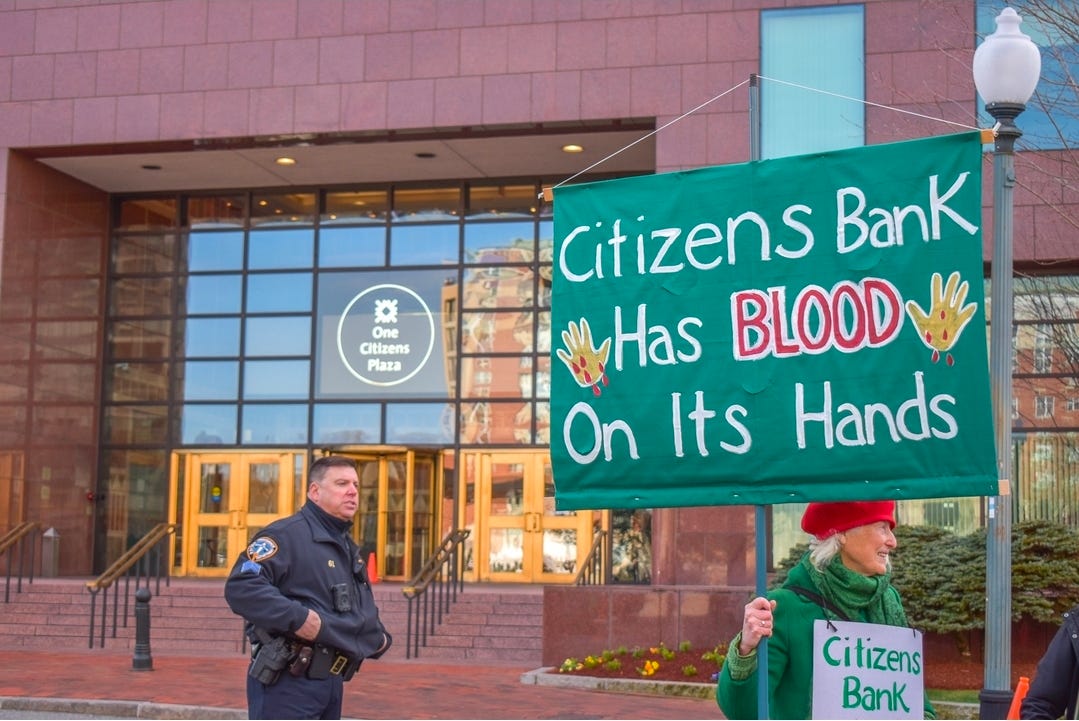
Before customers began pulling money from Citizens Bank, the issue was already human: immigrants held inside ICE detention facilities, families living with fear, and deaths reported inside a private detention system operated for profit. The fight now building around Citizens is not simply about where customers choose to bank. It is about whether congregational money, municipal deposits, customer accounts, and public trust should remain inside a financial system that organizers say helps keep private ICE detention companies bankable.
That pressure is now moving from protest into financial consequence. Faith groups, activists, lawmakers, customers, and Jersey City have either withdrawn funds from Citizens Bank or pledged to do so unless the bank reconsiders financing tied to CoreCivic and GEO Group, two of the country’s largest private detention operators. Organizers with the De-ICE Citizens Bank Coalition say Citizens has helped provide $2.5 billion in financing to the two companies, and they say more than 20 people have died in ICE facilities owned by those companies.
The Greater Boston Interfaith Organization announced that it was withdrawing another $2 million from Citizens accounts, after previously withdrawing $1 million earlier in the campaign. GBIO and its member congregations had previously held more than $20 million with the bank, according to reporting on the pressure campaign. The organization also published a report describing what it called “the human cost of private detention,” arguing that the bank relationships behind detention operators cannot be separated from the conditions and deaths reported inside facilities used by ICE.
The public harm is not abstract. People are detained inside facilities operated for immigration enforcement. Families search for information after loved ones are taken into custody. Advocates report fear, medical neglect, unsafe conditions, retaliation, and a system built to move people out of public view. When private companies run detention centers for profit, the accountability question is not limited to which federal agency signed the contract. It also reaches the banks that help those companies borrow, refinance, expand, and remain acceptable business partners.
That is why the Citizens campaign has widened beyond ordinary protest. Jersey City, New Jersey, announced that it would divest from Citizens Bank over the bank’s ICE detention financing ties, becoming the first municipality to publicly take that step in this campaign. The city’s announcement placed municipal money inside the accountability frame, making the issue not only a private customer decision but a public question about where government funds should sit when private detention is involved.
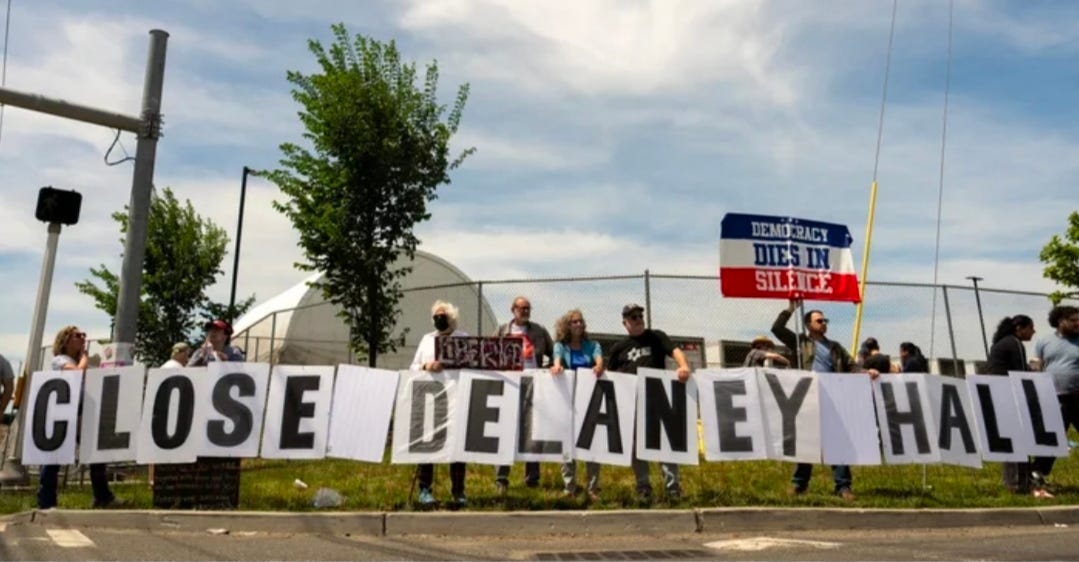
The local context matters. GEO Group operates Delaney Hall in Newark, an ICE detention facility that has become a focus of public scrutiny, protest, and legal action. GEO announced that ICE awarded the company a 15-year, fixed-price contract tied to the company-owned, 1,000-bed Delaney Hall facility. New Jersey officials later sued GEO Group after state health inspectors were denied full access to the facility, while public reporting has described protests, detainee complaints, and official denials around conditions inside the site.
Delaney Hall shows why the financing fight is not theoretical. The facility connects federal immigration enforcement, a private detention operator, state oversight disputes, local protest, and public concern about conditions inside immigration custody. GEO and government officials have disputed or denied some claims about mistreatment, but the public record around Delaney Hall has already made it a central example of how immigration detention expands when private prison companies receive contracts, financing, and political room to operate.
Citizens Bank has defended itself. The bank has said it is a relationship-based institution with a strong record of corporate responsibility, pointing to affordable housing commitments and grants to nonprofits. Citizens has also said it respects peaceful protest while arguing that banks do not set public policy and that its responsibility is to follow the law and apply standards consistently across clients and industries.
That response belongs in the record, but it does not erase the accountability question. Banks do not write immigration law, and Citizens does not operate ICE detention centers. But banks do choose which companies they finance, which relationships they maintain, and whether private detention operators remain able to present themselves as ordinary corporate clients while their facilities hold people for ICE. The campaign against Citizens is built around that distinction: not that the bank is ICE, but that organizers argue it helps finance companies whose business model depends on ICE detention.
This pressure did not begin with the latest withdrawals. Activists had already been following the money behind Citizens Bank’s ties to private detention operators; the new divestments show the campaign moving from public protest into direct financial consequence. When congregations, customers, lawmakers, and a municipality begin removing funds, the message shifts from objection to leverage.
The broader pattern is clear. ICE detention does not survive on federal contracts alone. It depends on private operators, legal arrangements, political protection, credit, financing, and institutions willing to normalize detention as ordinary business. Public divestment challenges that normalization by forcing banks, elected officials, and public institutions to answer whether the financial infrastructure behind migrant confinement should remain hidden behind corporate language.
For Americans Against ICE, this is the record that matters. Immigration enforcement is not only raids, detention vans, court dates, and deportation orders. It is also the private contractors that profit from custody, the facilities where people are held, the banks that keep those companies financially viable, and the public money that can either sustain or reject that system.
The question is not whether Citizens Bank writes immigration policy. It does not. The question is whether a bank can claim neutrality while financing companies whose business model depends on ICE detention.
Private ICE detention does not survive on federal contracts alone. It survives through the banks, investors, contractors, and public institutions willing to keep the system funded, normalized, and bankable.
Americans Against ICE documents the machinery behind immigration enforcement: detention conditions, custody deaths, private contractors, deportation systems, and the money trail that allows abuse to continue behind bureaucratic language.
Upgrade to paid subscription to support independent reporting that follows the record, names the actors, and keeps public attention on the people harmed by ICE detention.
Related reading:

The most corrupt member of the city council in Truth or Consequences, NM back in 2009, when they (illegally) voted on whether each individual citizen could speak to them during public comments… was the president of the local Citizens Bank branch. He violated federal law by allowing a corporation run by Greg Neal to use the banks address as their official location.
He also conspired with Greg Neal (and others), to con the city into annexing 9,000 acres of empty desert on the promise Hot Springs Development Corporation would build a NASCAR race track and high-end fly-in condominium development. Neal is the same guy who scammed Hillsdale College (yep, that conservative toilet of a school near Tampa, FL) out of $1 million for a sports medicine facility that he never built.
Not sure if it was shame, threat of arrest, or just fatigue that drove him to resign from office, but Citizens Bank never held him accountable for anything
👏👏👏👏👏👏👏👏👏👏👏